
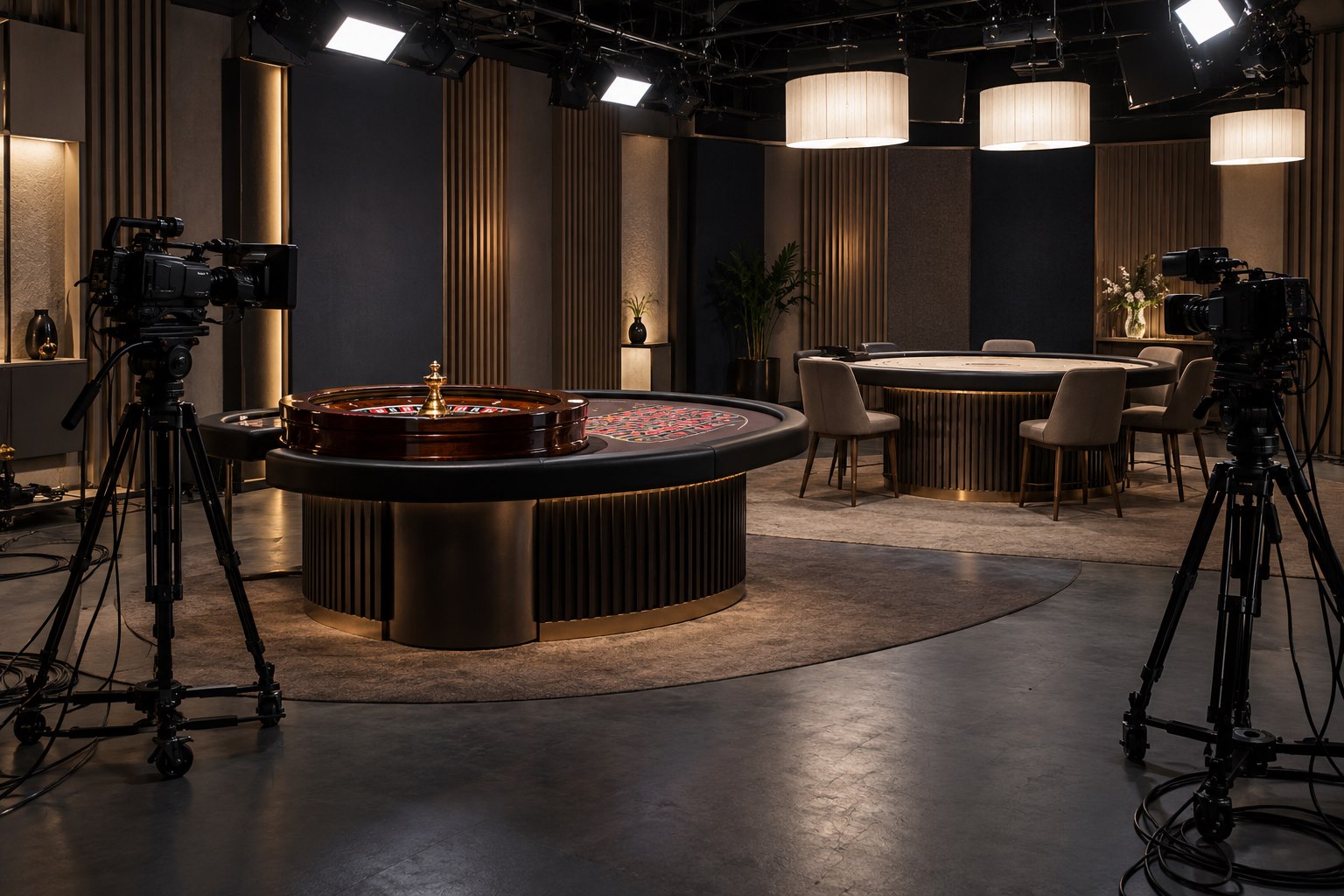
Live casino is becoming more localized and more hybrid, but public financial data still makes it difficult to isolate a defensible global category total. The useful story is in product structure and regional signals.
THEMP conclusion: public evidence supports a strong 2026 trend toward localized tables, branded game-show formats, dedicated studios and hybrid live/RNG experiences. It does not support a single open, audited global “live casino market size” figure.
Why supplier revenue is not the live-casino market size
Evolution is the clearest public financial proxy for live-casino demand, but its group revenue includes both Live and RNG products. In Q2 2026 Evolution reported €517.8 million of net revenue and €1.03 billion for the first half. Those figures describe the supplier’s total business, not player GGR and not the total global live-casino market.
The useful evidence is directional. Evolution reported quarter-on-quarter growth in Europe, 26.3% year-on-year growth in Latin America and 9.5% year-on-year growth in North America for Q2, while describing strong development in game shows and continuing demand for native-speaking tables. Those observations point to where product investment is working, but they cannot be extrapolated into a global category total without additional supplier and operator data.
Localization moved beyond language
Native-language dealers remain important, but localization in 2026 increasingly means product design, studio location and cultural format. Evolution launched a Brazilian version of Ice Fishing from São Paulo and expanded MONOPOLY Live across regulated U.S. states. Pragmatic Play’s Seotda Baccarat combines baccarat with a Korean-inspired Hwatu deck rather than merely translating a standard table.
This matters because live casino carries more cultural and operational context than an RNG slot. Presenter language, table rules, game speed, studio availability and local regulation can all affect suitability.
Game shows are now a format layer, not a novelty
Evolution’s 2026 roadmap announced more than 110 live and RNG releases across its brands and placed branded Hasbro content at the centre. MONOPOLY Roulette combines a classic roulette base with board-game-inspired bonus mechanics, while MONOPOLY Roll ’em uses a live dice format. Pragmatic Play has similarly extended slot IP into live casino through Gates of Olympus Roulette and introduced Color Game Bonanza as a live dice-based game show.
The common mechanism is hybridisation: a familiar table or physical random event is wrapped in multipliers, bonus states, branded IP or game-show presentation. That creates differentiated entertainment while preserving a recognisable wager structure.
Dedicated studios and real-venue streaming solve different operator problems
Dedicated studios allow an operator to control branding, table availability and localized presentation. Playtech and bet365 expanded dedicated live-casino studio deployments in the U.S. during 2026. By contrast, Playtech’s September 2026 “Live from London” launch with the Hippodrome streams roulette, blackjack and baccarat from a recognisable physical casino venue.
Those models are not substitutes. Dedicated studios optimise operator identity and capacity; venue streaming trades on authenticity and place. The growth of both suggests the category is segmenting rather than converging on a single live-casino product.
| 2026 pattern | Observed evidence | What it means |
|---|---|---|
| Localized live tables | Native-speaking demand; Brazil-specific studio content | Localization is becoming operational, not only linguistic |
| Branded game shows | Hasbro/Evolution roadmap; slot-IP crossover | IP and bonus layers differentiate familiar base games |
| Dedicated studios | Operator-specific studio launches | Brand control and table capacity remain strategic |
| Venue streaming | Playtech/Hippodrome “Live from London” | Physical-casino authenticity is becoming a digital product feature |
What we can measure reliably
- Public supplier revenue and regional growth where companies disclose it.
- Studio openings, market launches and product releases from primary company sources.
- Licensed-market GGR where regulators report live casino as a separate product - which many do not.
- Provider roadmap breadth and evidence of localization.
What remains opaque
There is no complete public database of live-casino player GGR by provider, game type and jurisdiction. Supplier revenue is affected by commercial agreements and may include RNG. Operators often report iGaming as a combined category. As a result, any global total built from public sources alone would require assumptions too large to present as an observed fact.
Method used by THEMP
We use listed-supplier financial disclosures for directional demand, then primary product releases for format change. Revenue, player GGR and supplier fees are kept separate. A release announcement is evidence that a format exists; it is not evidence of market share or player adoption unless supporting data is published.

External sources are cited for provenance. THEMP’s comparisons, scoring and interpretation are editorial analysis and are not claims made by the cited organizations.